Background
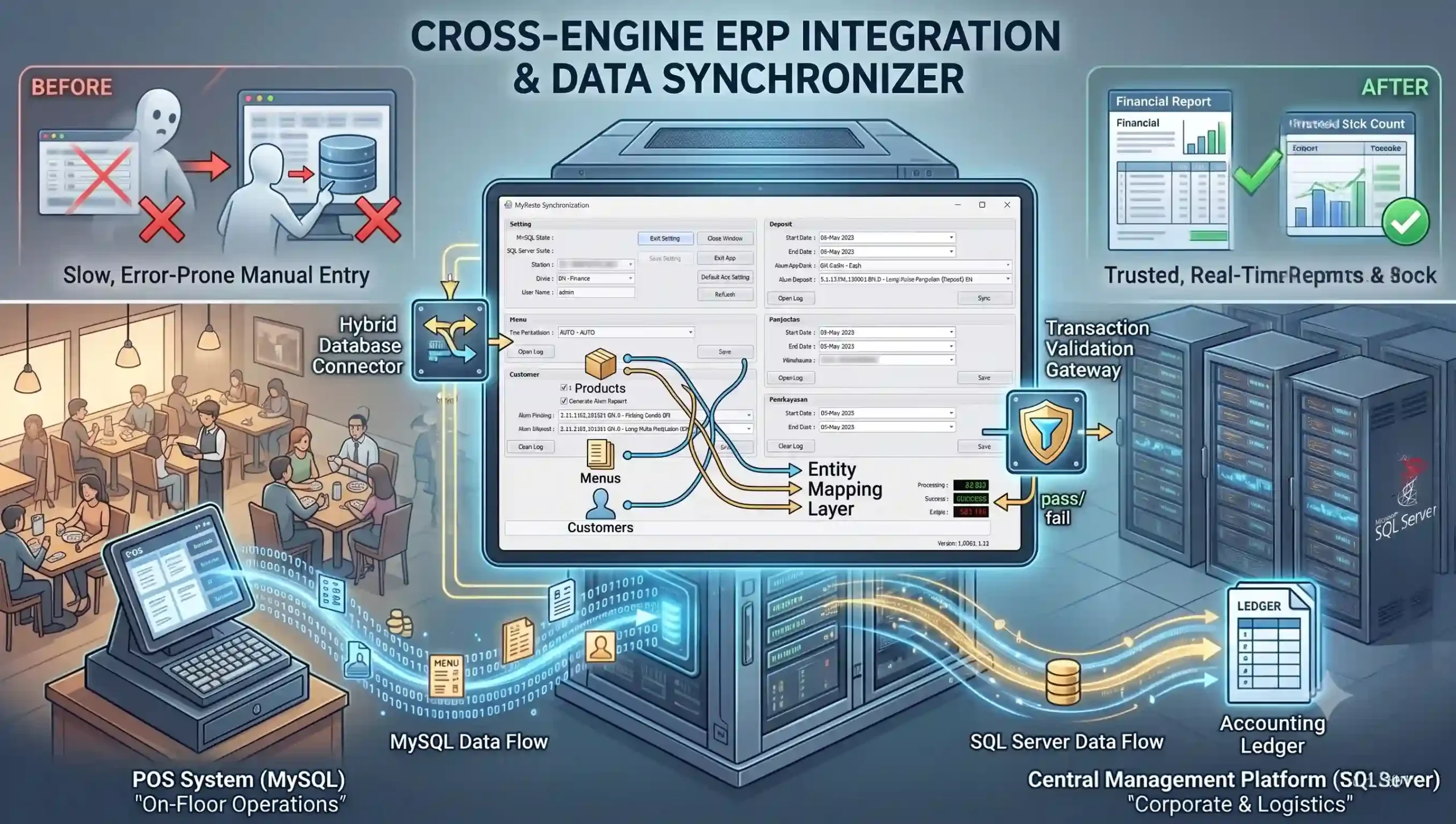
One of the clients was running a third-party POS system on MySQL for their on-floor operations — it handled daily sales fine, but the data stayed trapped in that system:
- The central management platform on SQL Server had no visibility into what was being sold on the floor.
- Every day, someone was manually re-entering sales data from one system into the other.
- The process was slow, error-prone, and completely unsustainable at scale.
- Financial reports and stock counts couldn’t be trusted until the manual entry was done — which was always hours behind reality.
Solution
Rather than replacing either system, a Desktop Middleware application was introduced to act as a dedicated synchronization bridge between the two platforms. I took over the development and maintenance of this middleware, taking full responsibility for ensuring data moved automatically and keeping both systems aligned without any manual re-entry.
Implementation
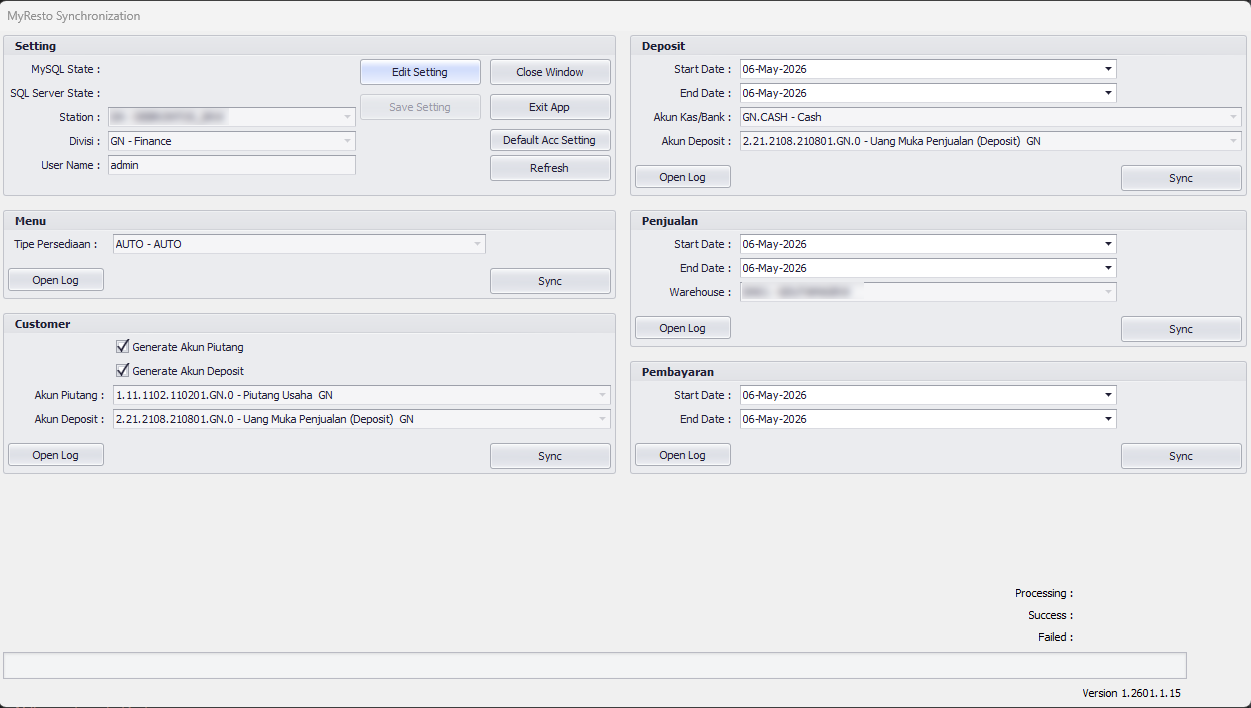
- Database Connection & Mapping: I managed and optimized the Hybrid Database Connector responsible for extracting data from the MySQL engine and loading it into SQL Server. I ensured the mapping layer accurately handled a wide range of entities—products, menus, customers, and deposits—so that POS data aligned perfectly with the receiving Accounting and Sales Logistics modules.
- Validation & UI Enhancements: I refined the transactional logging and validation system to verify every sales and payment record before it entered the accounting ledger, successfully preventing corrupted or incomplete data from flowing through. I also maintained and updated the DevExpress interface, giving users a reliable view of the sync process and the tools to monitor, verify, and execute data transfers manually when needed.
Impact
- Manual data re-entry between the two systems was completely eliminated.
- Financial reports and stock counts became available immediately after sync, rather than hours after manual consolidation.
- Data consistency between the POS floor system and the central Accounting and Sales Logistics modules was enforced automatically on every sync cycle.
- The risk of human error in financial records tied to daily sales was effectively removed.