Background
One of the clients was running a third-party POS system on MySQL for their on-floor operations — it handled daily sales fine, but the data stayed trapped in that system:
- The central management platform on SQL Server had no visibility into what was being sold on the floor.
- Every day, someone was manually re-entering sales data from one system into the other.
- The process was slow, error-prone, and completely unsustainable at scale.
- Financial reports and stock counts couldn’t be trusted until the manual entry was done — which was always hours behind reality.
Solution
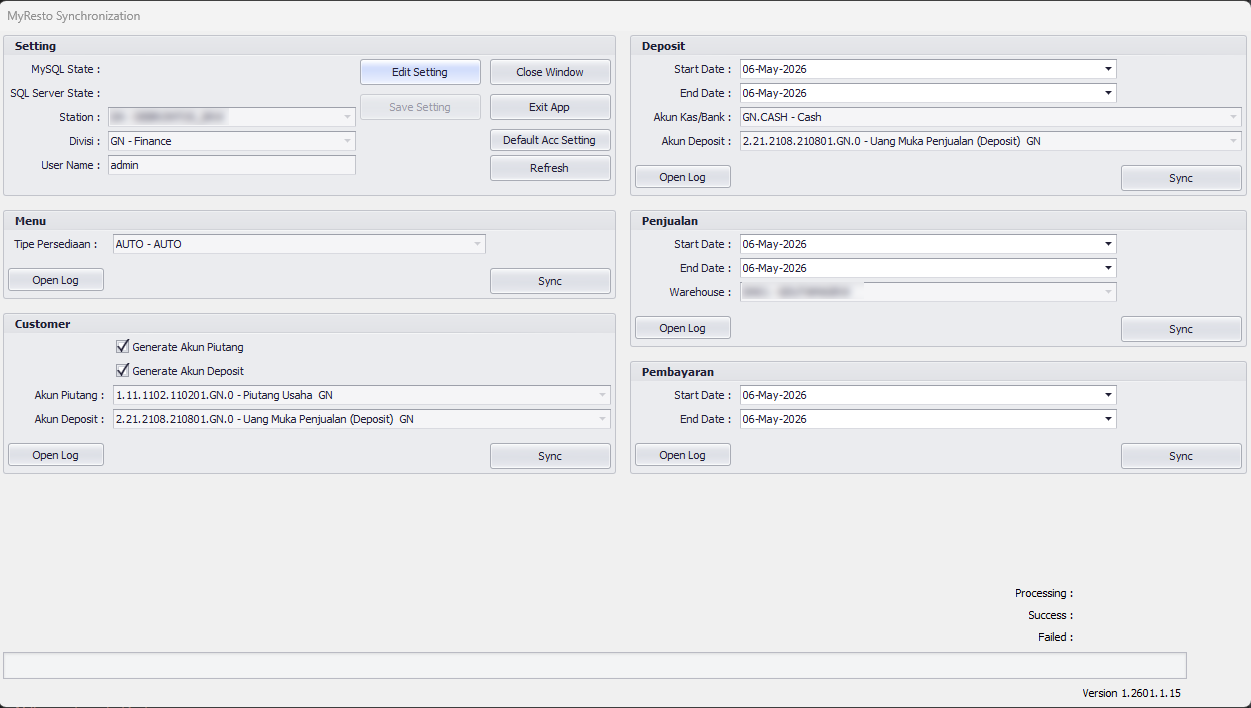
Rather than replacing either system, a Desktop Middleware application was introduced to act as a dedicated synchronization bridge between the two platforms. I took over the development and maintenance of this middleware, taking full responsibility for ensuring data moved automatically and keeping both systems aligned without any manual re-entry.
Implementation
- Database Connection & Mapping: I managed and optimized the Hybrid Database Connector responsible for extracting data from the MySQL engine and loading it into SQL Server. I ensured the mapping layer accurately handled a wide range of entities—products, menus, customers, and deposits—so that POS data aligned perfectly with the receiving Accounting and Sales Logistics modules.
- Validation & UI Enhancements: I refined the transactional logging and validation system to verify every sales and payment record before it entered the accounting ledger, successfully preventing corrupted or incomplete data from flowing through. I also maintained and updated the DevExpress interface, giving users a reliable view of the sync process and the tools to monitor, verify, and execute data transfers manually when needed.
Impact
- Manual data re-entry between the two systems was completely eliminated.
- Financial reports and stock counts became available immediately after sync, rather than hours after manual consolidation.
- Data consistency between the POS floor system and the central Accounting and Sales Logistics modules was enforced automatically on every sync cycle.
- The risk of human error in financial records tied to daily sales was effectively removed.
Background
As the company’s software products grew and reached more clients, a quiet but serious problem began to surface:
- Every new client activation had to be handled manually — sending license keys, tracking expiry dates, pushing updates one by one.
- There was no central system to oversee which devices were running which version.
- No reliable way to cut off access when a license expired or a device was reported lost.
- The process was fragile, error-prone, and simply didn’t scale.
Solution
The answer was a Centralized License Management Hub — a system that could govern the entire software lifecycle from one place. Rather than patching the existing manual process, I designed it from scratch to be modular and agnostic, meaning it could be plugged into any desktop application the company built, not just one product.
Implementation
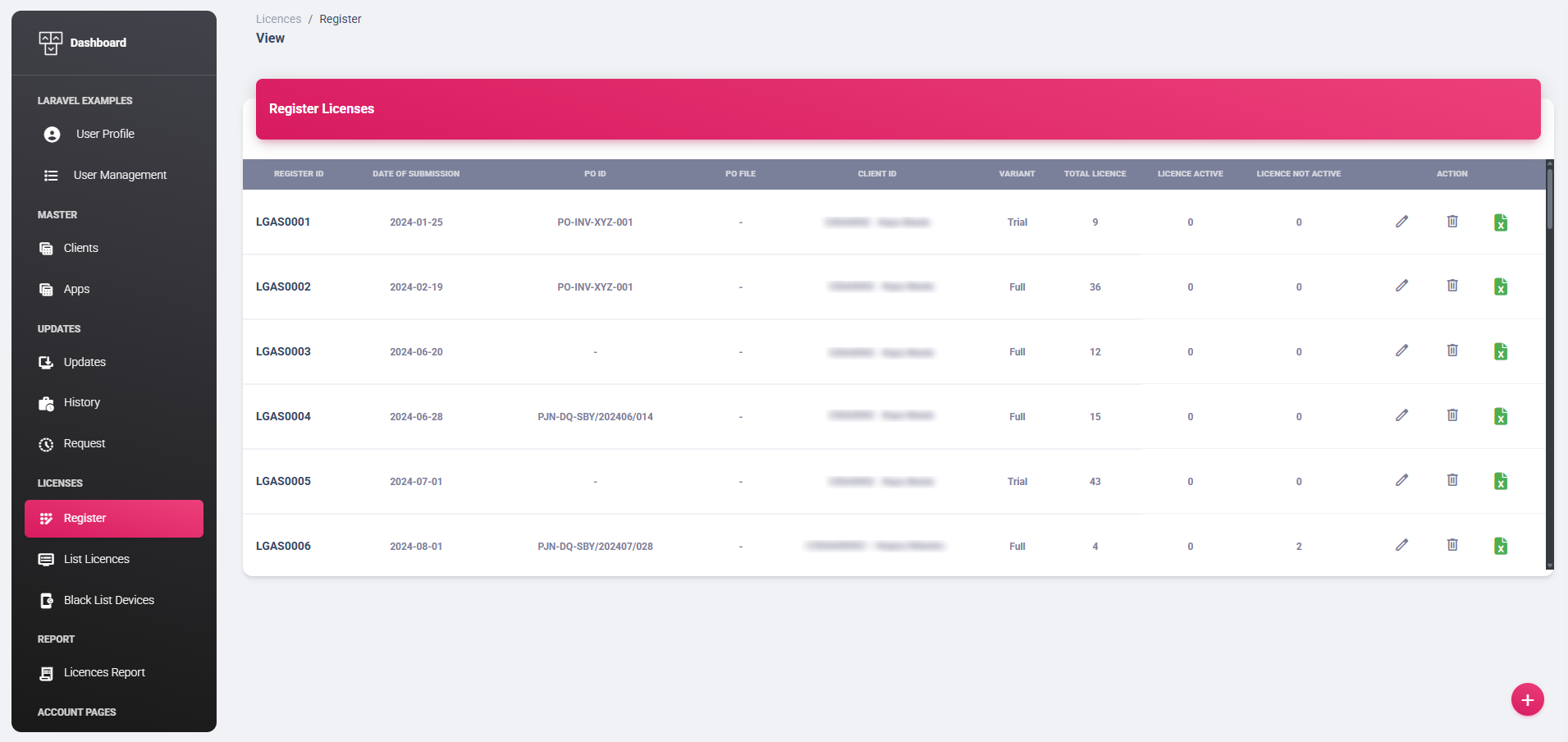
The system was built on a Laravel backend exposing RESTful APIs, integrated with VB.NET desktop clients on the user side. It supports two license tiers — Full Access and Customizable Trial — with configurable validity periods that can be adjusted on the fly without redeployment.
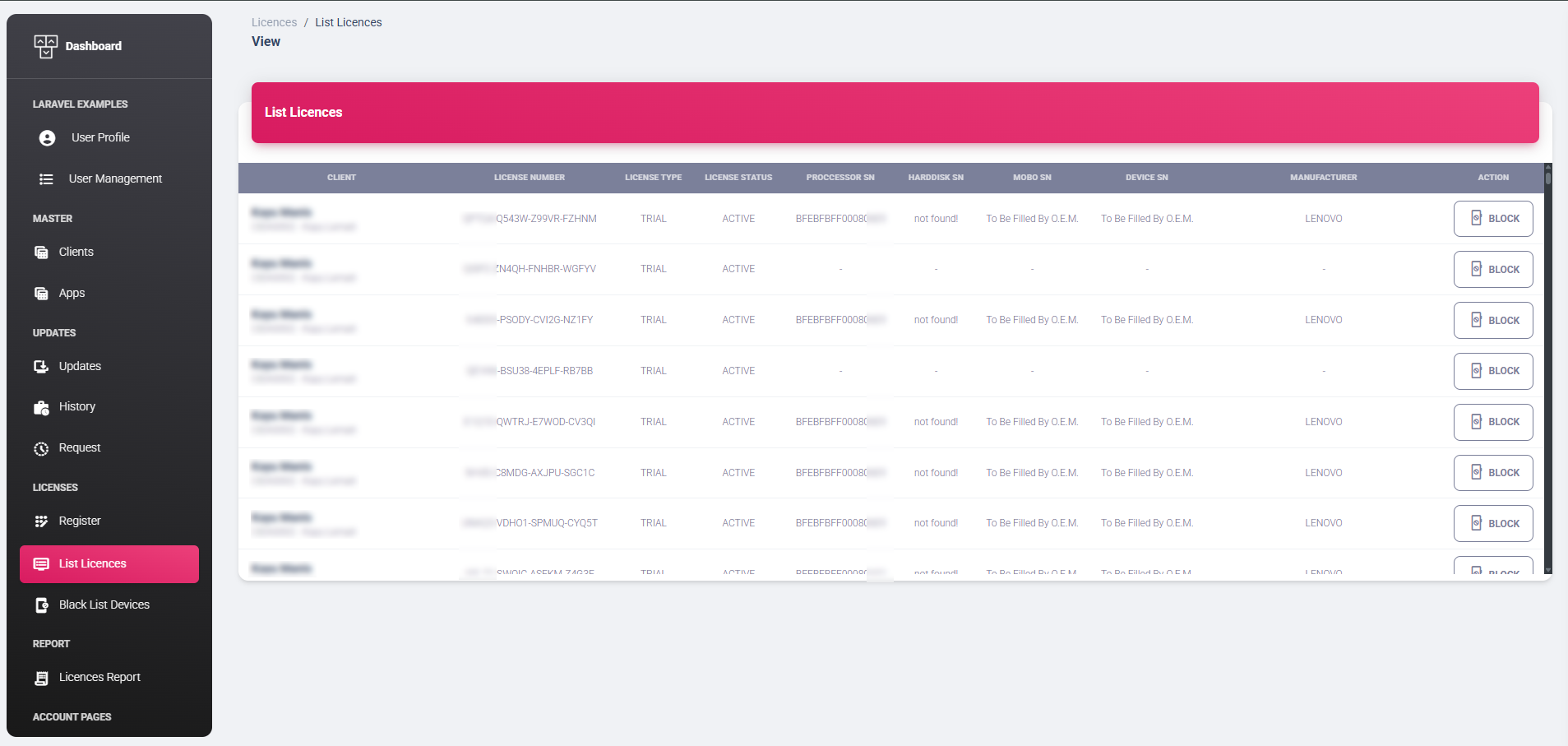
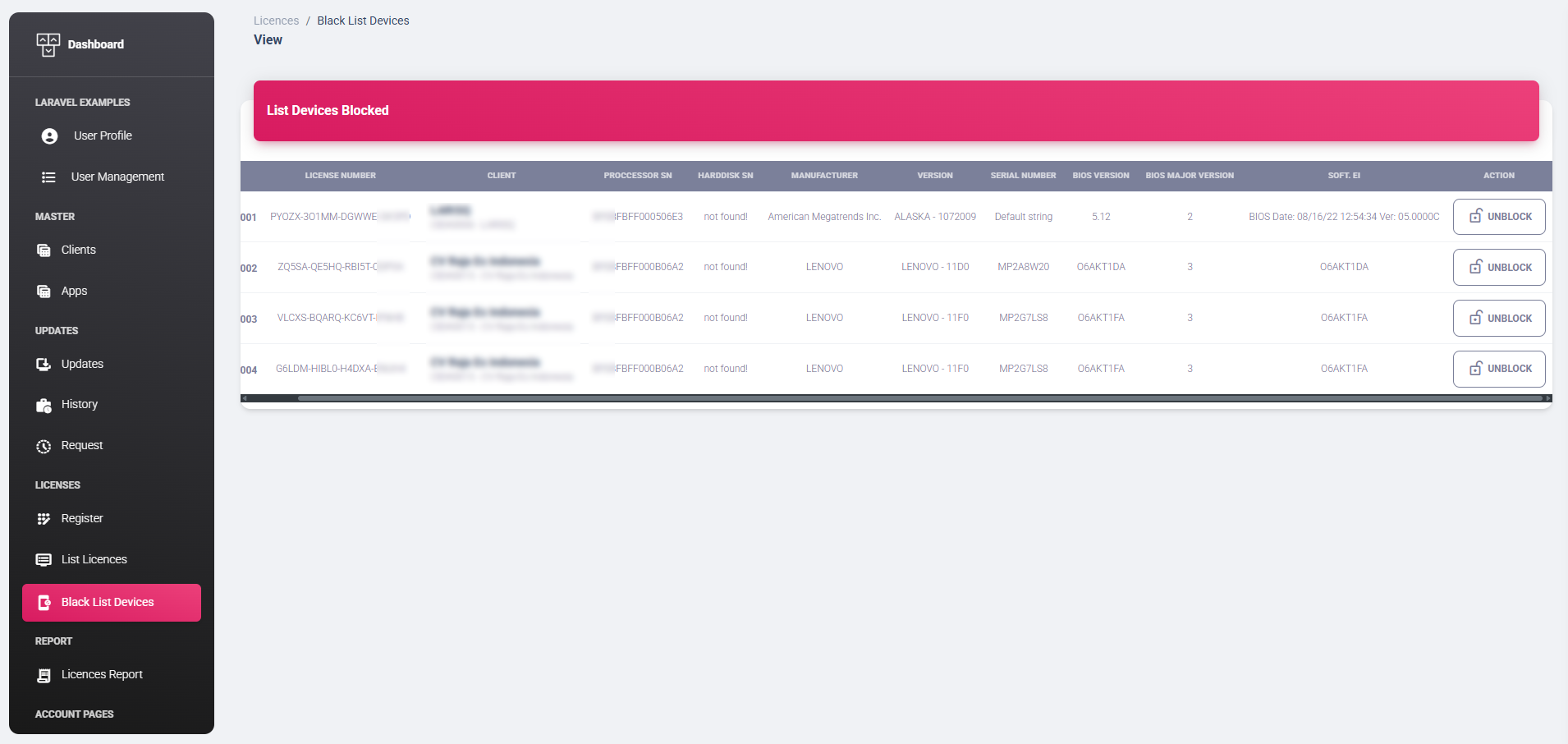
On the security side, every license validation happens in real time. Each device is fingerprinted at the hardware level, so a license can’t simply be copied to another machine. If a device is flagged — whether for policy violation or being reported missing — it can be remotely blacklisted and locked out instantly.
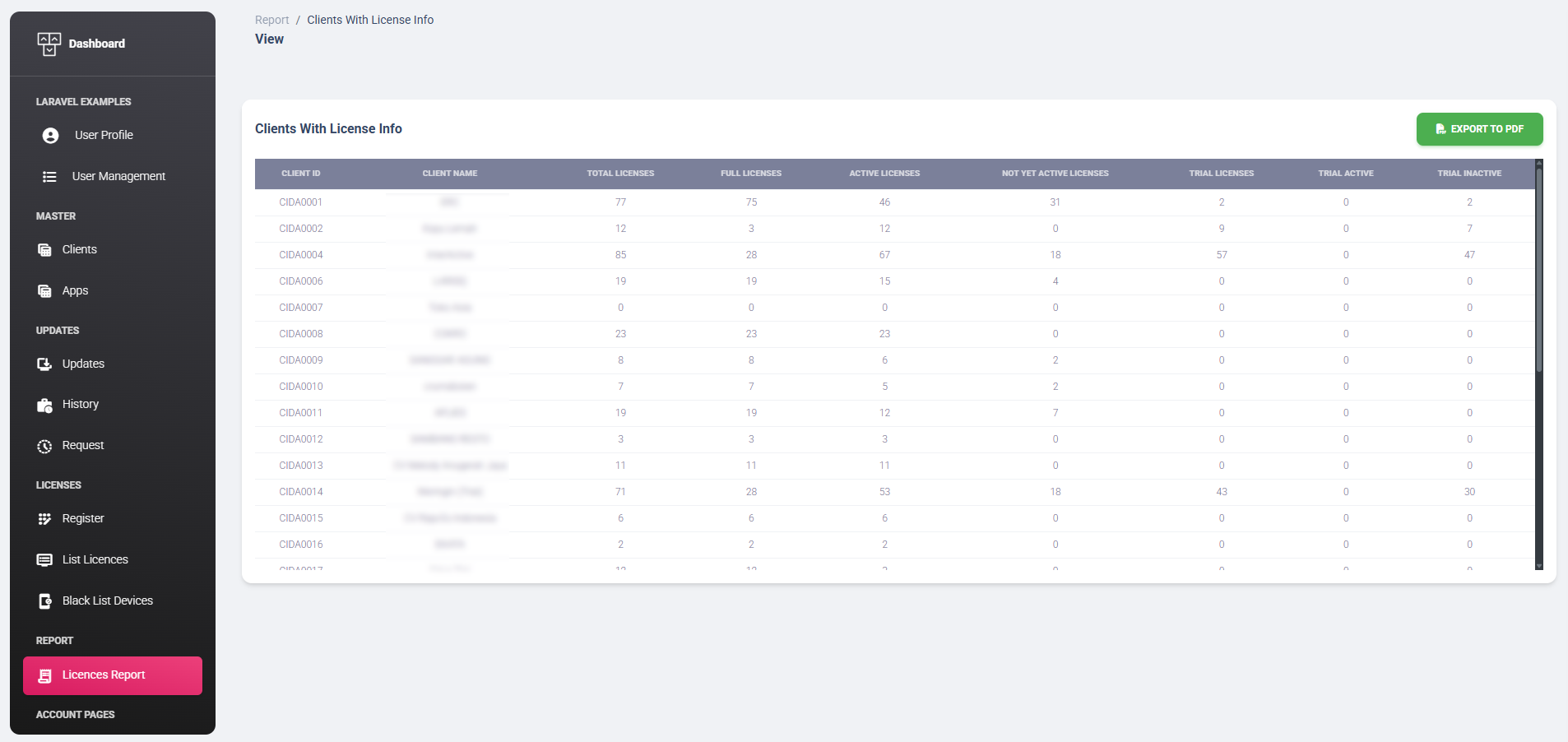
Distribution was handled through an automated update engine written in Bash Scripting, which pushed the latest version to all registered devices simultaneously. A monitoring dashboard gave the team a live view of which client owned which devices, what license type they were running, and when it was set to expire.
Impact
- Manual intervention in activation and maintenance dropped by 80%.
- Version consistency improved to 100% across the client ecosystem — no more compatibility issues from outdated builds on forgotten machines.
- The modular architecture allowed the same system to be extended to other company products without rebuilding anything from scratch.
- Remote blacklisting gave the team an immediate response mechanism for lost or misused devices.