Background
Inside the production floor, a different kind of accuracy problem was present:
- Workers were manually identifying which type of material was in each bucket before weighing — fast, but unreliable.
- Misclassification meant production data for scrap materials (Kiriko and NG Wheel) couldn’t be fully trusted.
- There was no reliable way to trace which bucket held what material at any given moment.
- Without accurate classification data, optimizing the reprocessing of scrap material was largely guesswork.
Solution
I built a multi-hardware integration system that combined RFID tagging with industrial scale readings — removing the human identification step entirely. Each bucket would carry its own identity via an RFID tag, and the scale would capture the weight automatically through PLC integration. The system would then match the two data points together without any operator input.
Implementation
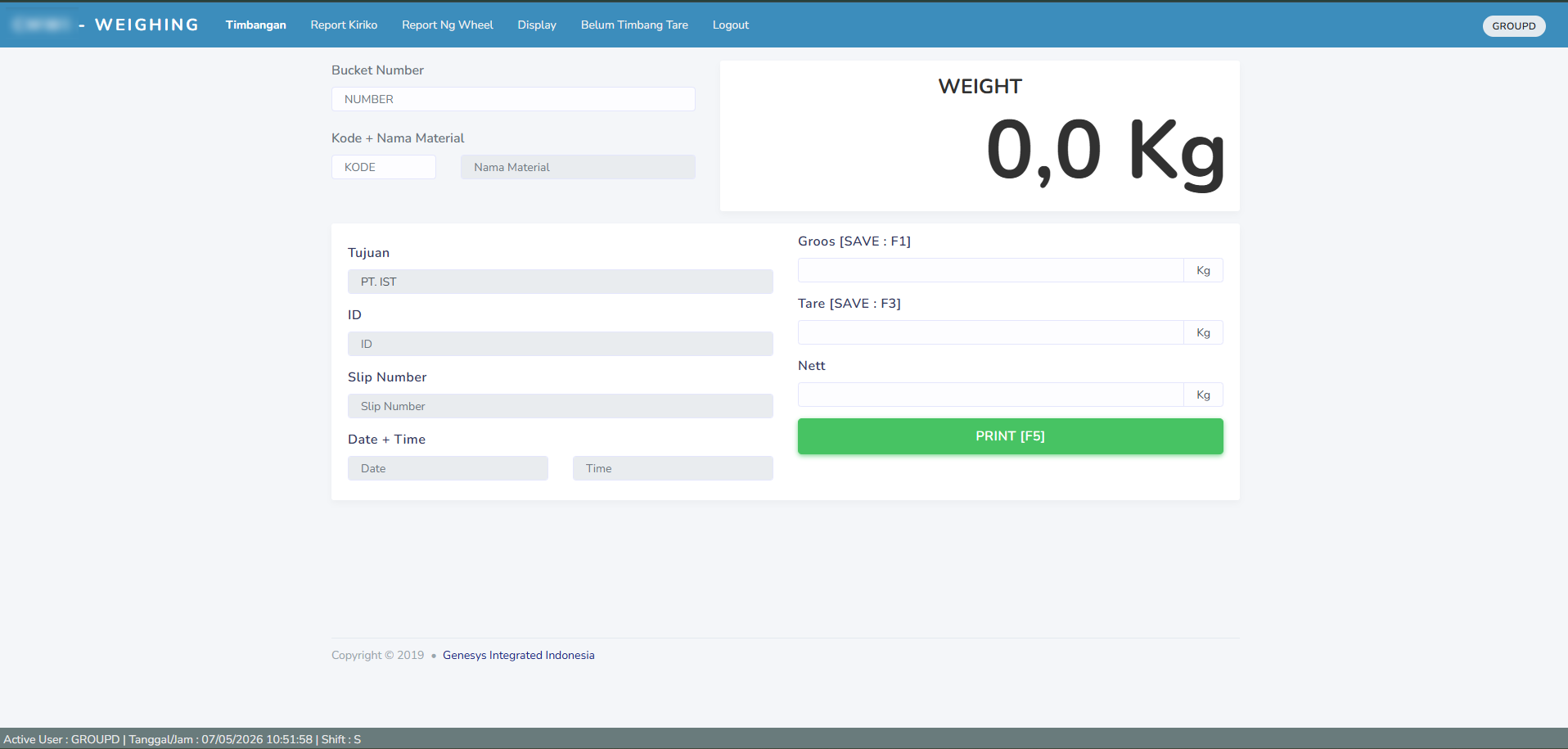
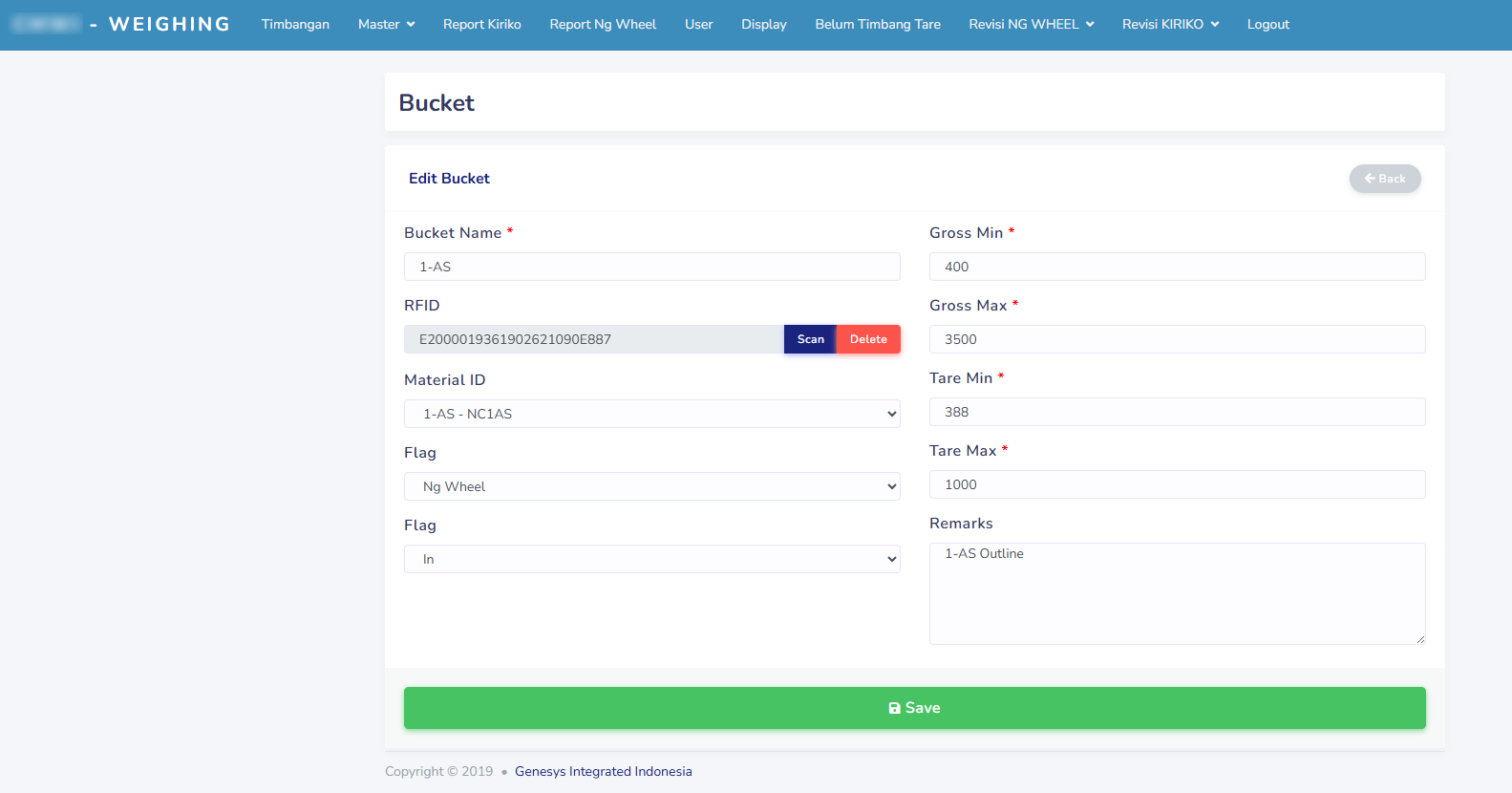
The RFID layer was implemented using the Zebra RFID SDK (Symbol.RFID3) in a VB.NET desktop application. Each physical bucket was registered in the system with a unique RFID tag linked to its material classification. When a bucket came in for weighing, the reader identified it automatically.
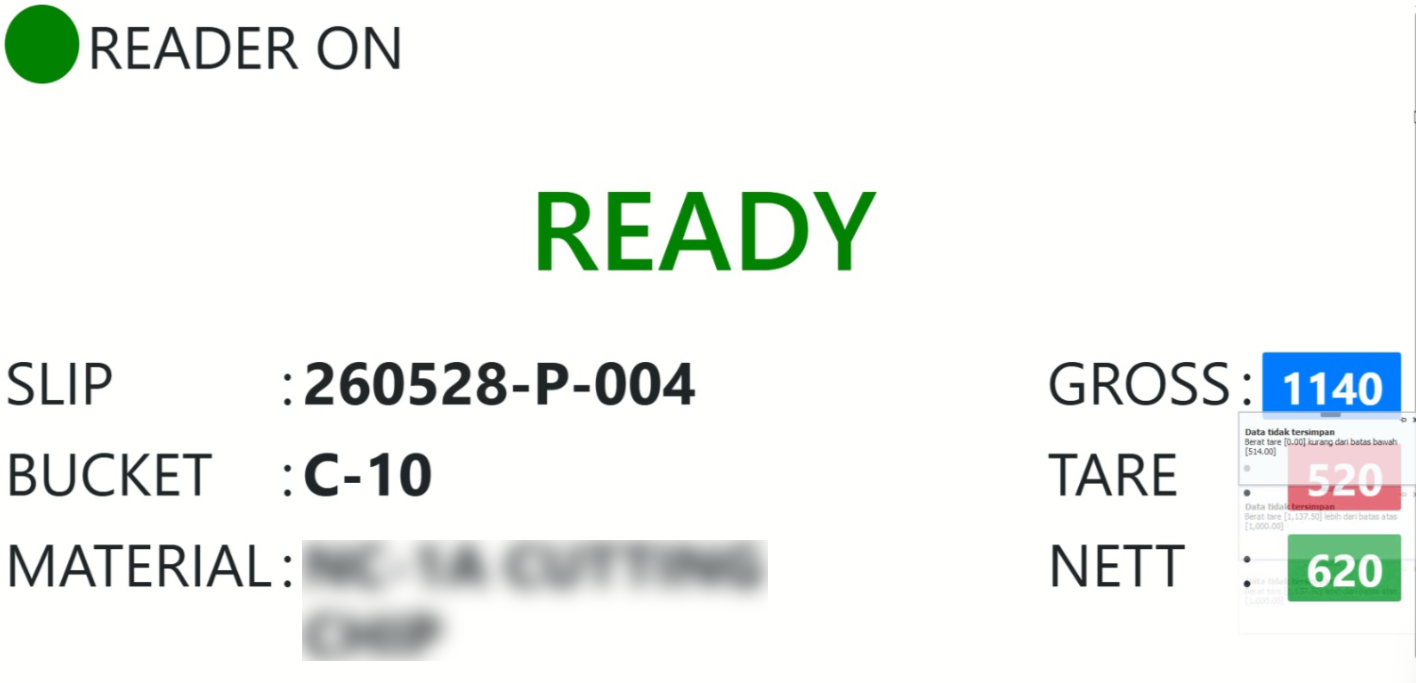
The industrial scale was connected via PLC, which performed a Direct Database Write the moment a weighing event occurred. A data correlation engine on the VB.NET side then paired the bucket’s RFID-derived identity with the PLC-derived weight, producing a complete, accurate record for every transaction.
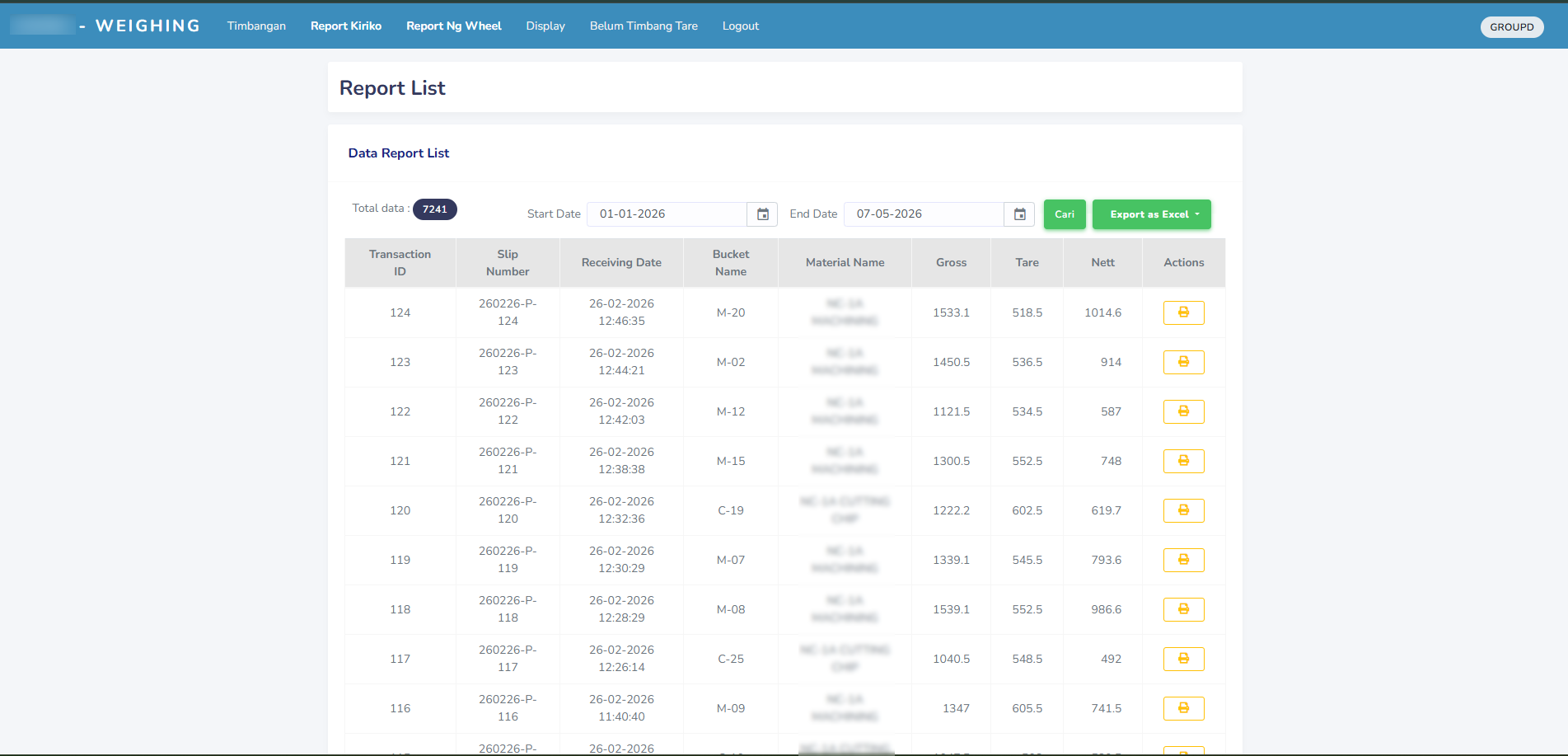
A Laravel-based web dashboard was built on top of this to give management real-time visibility into production volumes — total Kiriko and NG Wheel material processed, with full traceability per transaction.
Impact
- Material misclassification dropped to zero — every database entry was backed by a hardware-verified RFID read and a direct PLC weight capture.
- Production teams gained instant visibility into scrap volumes, enabling more efficient reprocessing planning.
- Every transaction carried a complete digital trail — timestamp, material type, weight, and container ID — making audits straightforward.
- The combination of RFID and PLC data removed the last manual touchpoint in the classification and weighing workflow.
Background
At a manufacturing facility, every truck entering and leaving the site passed over a weighbridge — and every measurement was being recorded by hand:
- Operators wrote down weight readings manually, creating an obvious opportunity for recording errors or manipulation.
- Records existed only on paper, with no reliable audit trail for external inspectors.
- When the customs authority (Bea Cukai) required material reporting, the company had no digitally verifiable data to present.
- The administrative process around weighing was slow, paper-heavy, and entirely dependent on human accuracy.
Solution
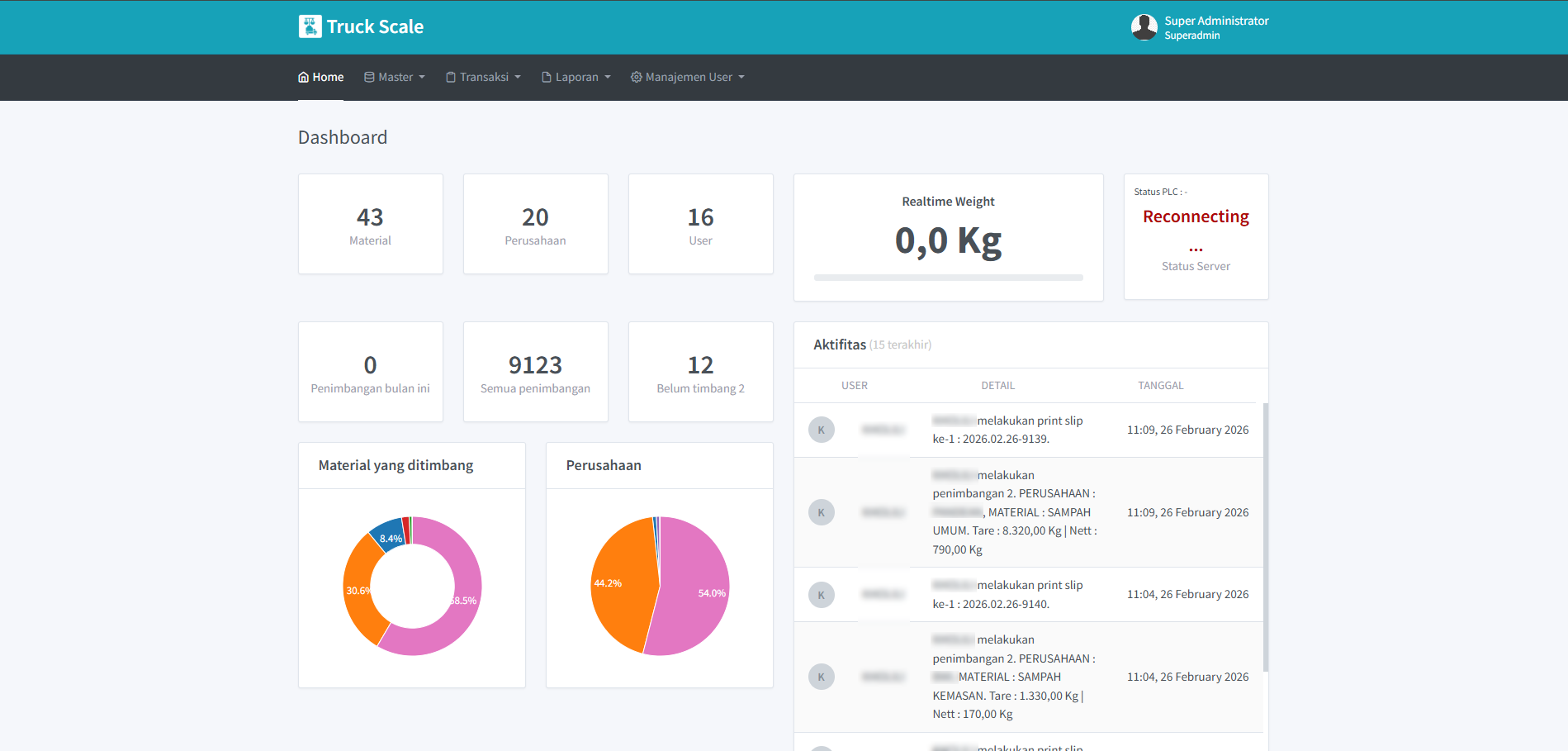
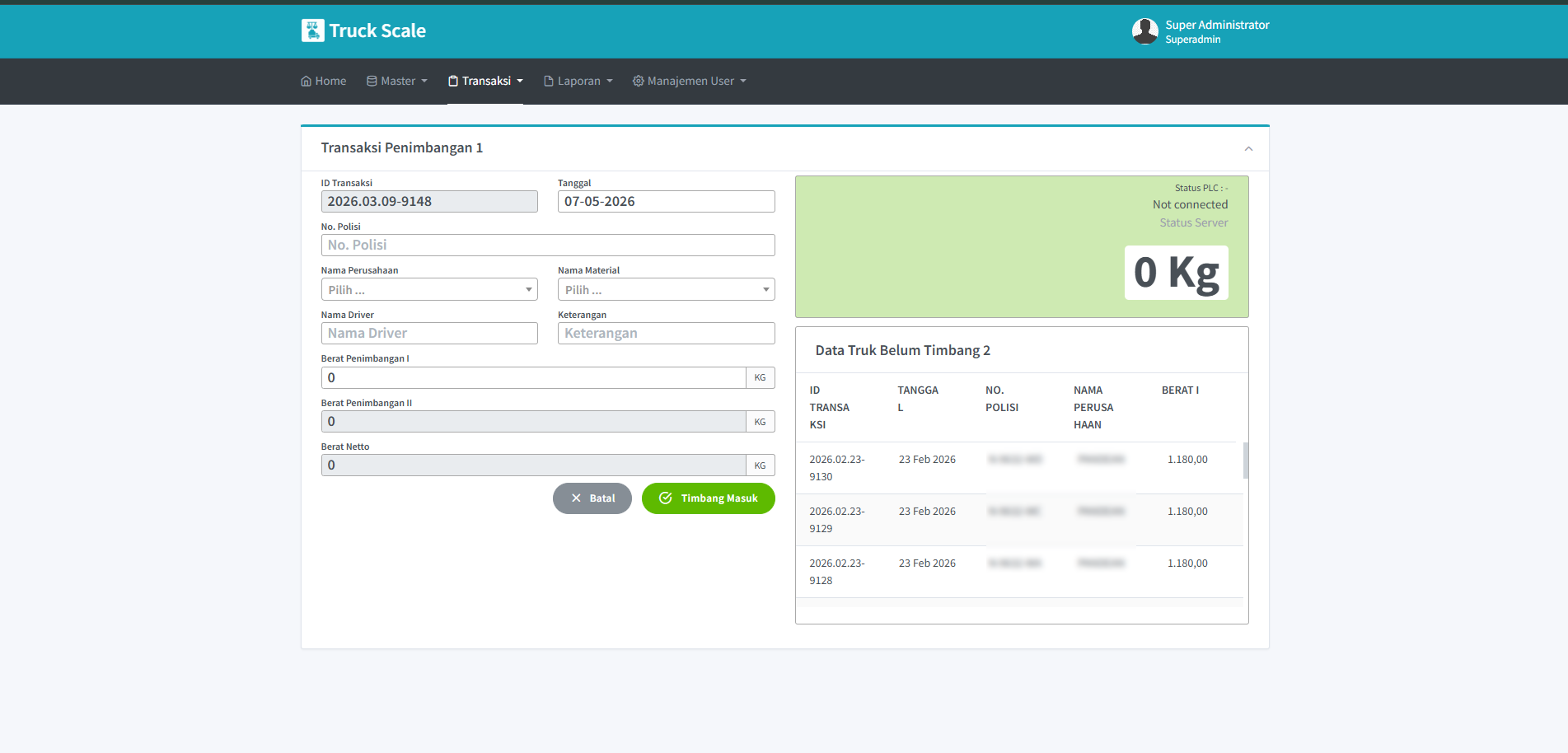
Rather than building the system from scratch, I took over the ongoing development and maintenance of this Laravel-based web platform. Acting as the central control and monitoring hub, the system connected directly to the weighbridge hardware through a PLC (Programmable Logic Controller). I took full responsibility for ensuring the platform reliably captured weight data automatically the moment a truck was on the scale — keeping human involvement out of the measurement and preventing any post-weighing alterations.
Implementation
- Hardware Integration & Security: I maintained and optimized the hardware-to-web bridge that received live data from the PLC sensor and wrote it directly to the database, completely bypassing manual input. I also managed the system’s anti-tamper validation layer, ensuring that only data originating strictly from the sensor could be recorded, effectively blocking any attempts to modify weight values through the user interface.
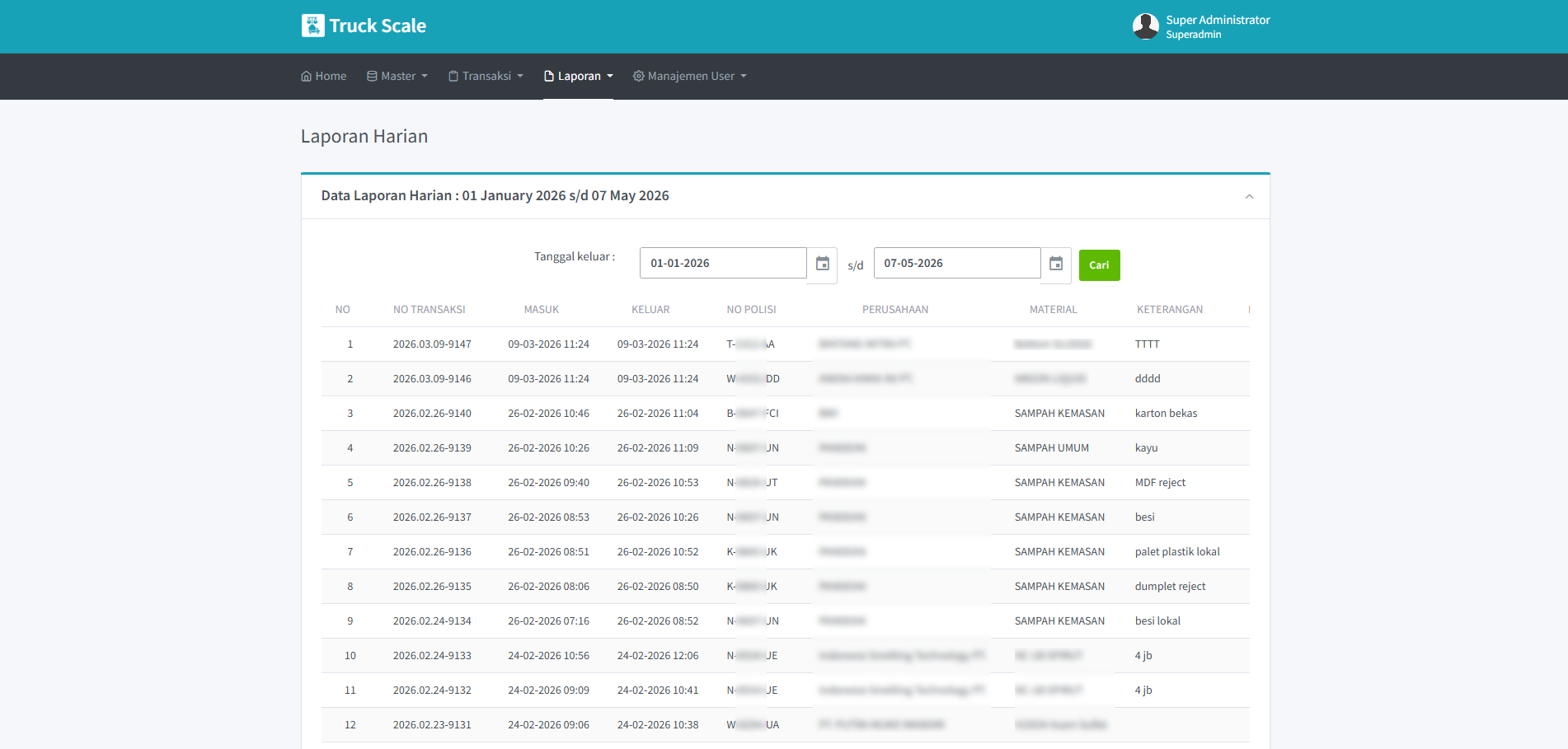
- Audit-Ready Data & Reporting: I oversaw the database architecture to ensure it remained strictly audit-ready, where every transaction carried a clear, traceable record for verification by external authorities. Furthermore, I managed and refined the automated material recapitulation module, which classified incoming and outgoing materials by type, vendor, and tonnage, providing the management team with a live, accurate view of the logistics flow without needing to dig through raw records.
Impact
- Human input was fully removed from the measurement process, eliminating the risk of recording errors and manipulation.
- Customs inspections became significantly faster — every data point was already centralized, timestamped, and accessible through the web platform.
- Management gained instant visibility into material volumes entering the facility, enabling more precise production planning.
- The accuracy of financial data tied to material purchases improved substantially as a direct result of automated weight capture.