Background
The sales team was growing more mobile, and the backend needed to support it. Before any mobile app could be built, the foundation had to be right:
- Architectural Limitations: The existing system wasn’t structured to handle the complexity of a full sales force operation. Business logic, data access, and API concerns were all tangled together, making the codebase fragile and difficult to extend.
- Lack of Connectivity: There was no reliable API backbone capable of supporting real-time data synchronization between field devices and the central office.
- Cost-Efficiency Mandate: Management required a highly cost-effective hosting strategy. We needed to build the new backend using ASP.NET Core to enable deployment on Linux VPS environments, drastically reducing monthly infrastructure costs compared to traditional Windows servers.
Solution
I built Force Sales Cloud as the dedicated backend infrastructure for the sales force operation, implementing a Clean Architecture approach with a strict 4-layer structure. The goal was to separate concerns clearly so the system could evolve — new features added, infrastructure swapped — without ever touching the core business logic.
Implementation
The architecture was divided into four layers: Domain for core logic, Application for use cases, Infrastructure for data persistence, and Presentation for the Web API surface. Entity Framework Core was used to scaffold the existing legacy database, modernizing data access without disrupting the live database structure.
A Repository Pattern with Dependency Injection was applied throughout for clean data abstraction, making the codebase easier to test and maintain over time. The RESTful endpoints were designed specifically for high-speed synchronization between the Flutter mobile app and the central logistics database. Deployment was handled through a dotnet publish workflow integrated with IIS for consistent, high-availability service delivery.
Impact
- The 4-layer architecture gave the team the confidence to add new features without risking regression in existing business logic.
- Legacy database access was modernized through EF Core Scaffold with zero disruption to the live environment.
- API response times were optimized for mobile sync scenarios, reducing latency during high-volume transaction loads.
- The backend became the single reliable source of truth connecting field sales activity to central administration.
Background
The POS ecosystem was working well on the floor, but management had a different problem:
- Sales reports, stock turnover, and financial summaries were all locked behind desktop software that only ran at the office.
- Decisions were being made based on yesterday’s printout rather than live data.
- There was no way to monitor business performance remotely — not from a phone, not from a hotel room, not from a branch visit.
Solution
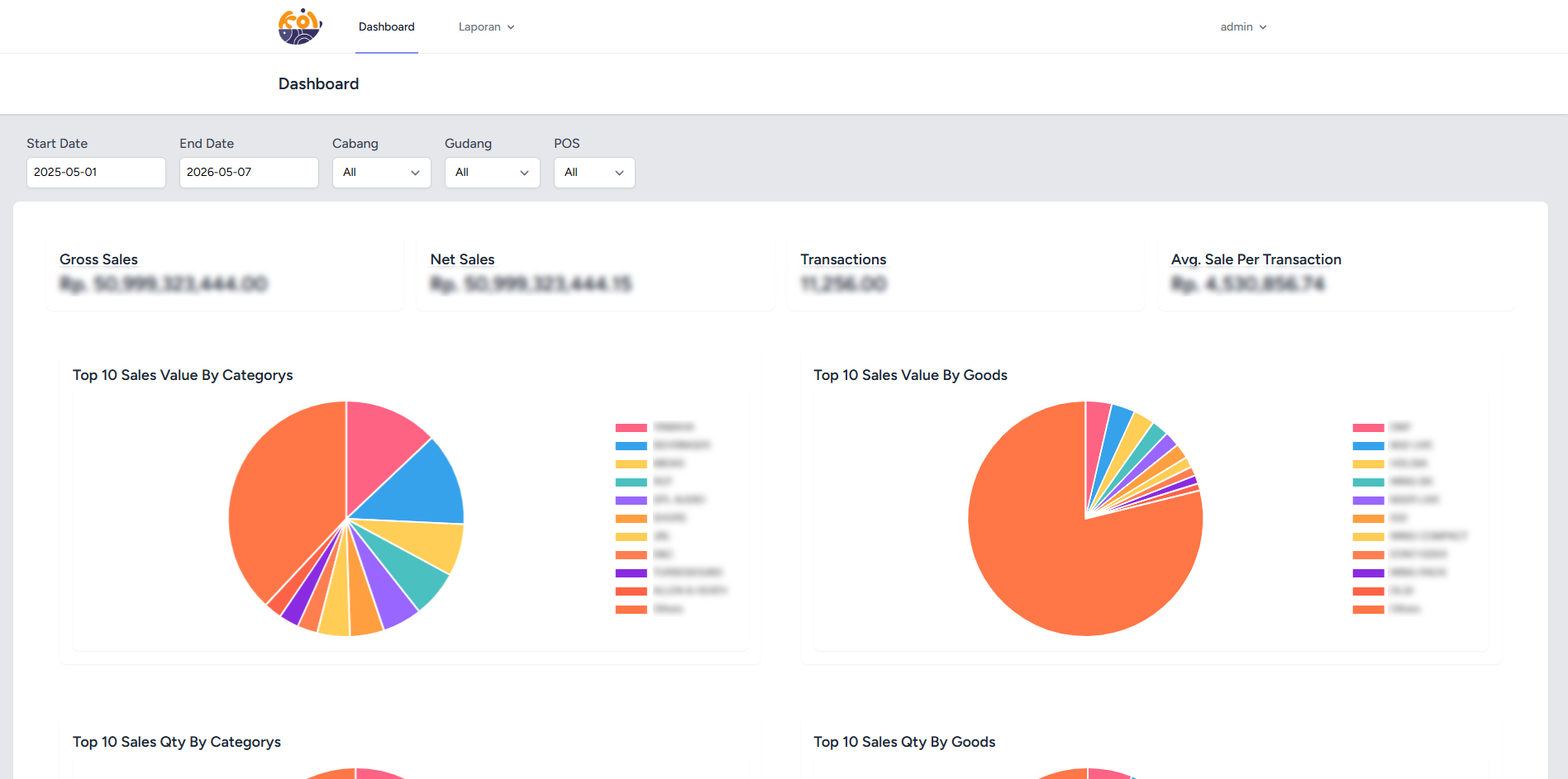
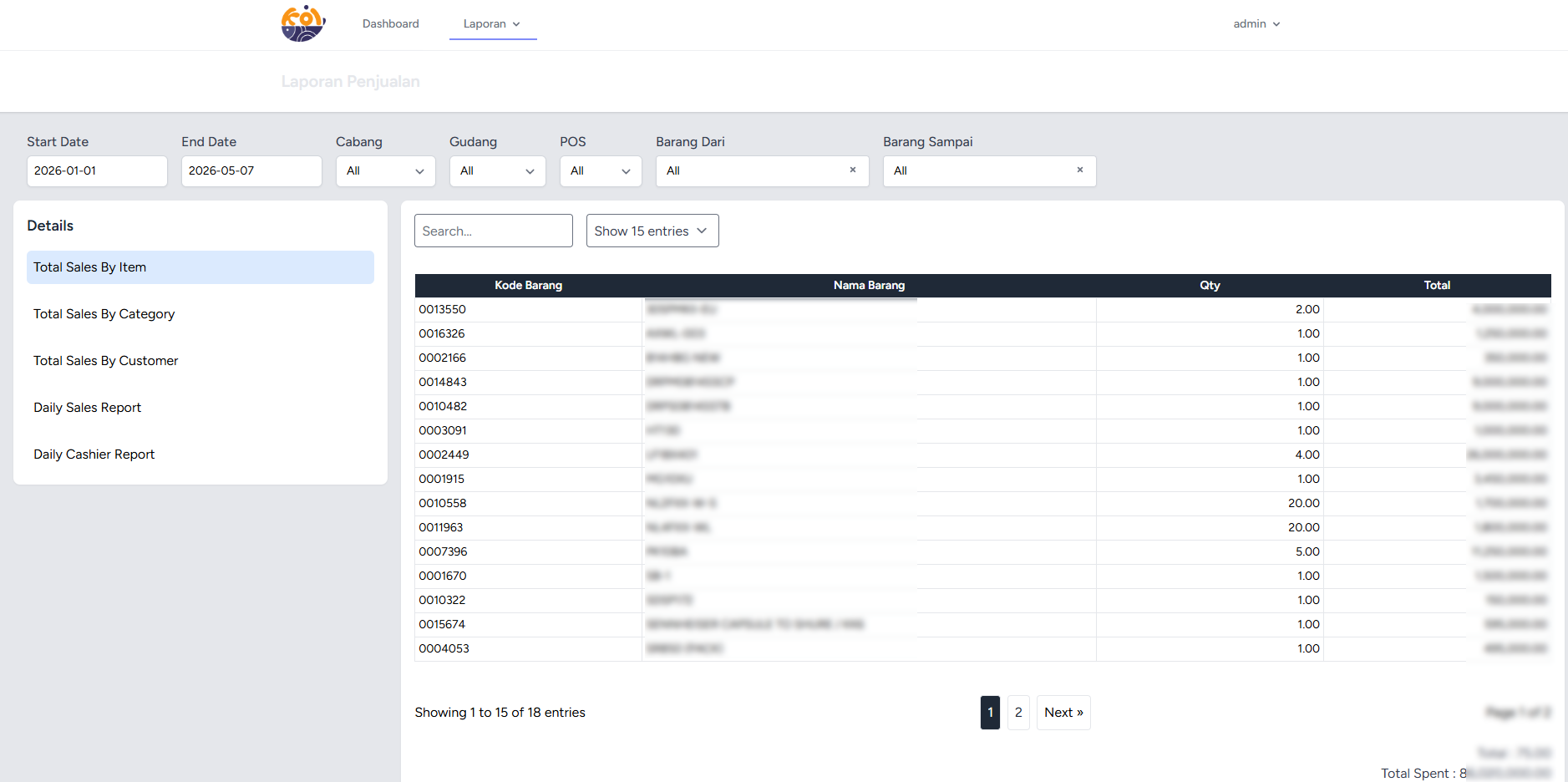
Rather than rebuilding the POS system, I extended it with a web-based reporting dashboard that plugged directly into the existing ASP.NET Web API. The idea was to bring the data to wherever management was — phone, tablet, or laptop — without duplicating business logic or maintaining a separate data pipeline.
Implementation
The frontend was built with Laravel Livewire, enabling reactive, real-time interfaces without full page reloads. Alpine.js handled lightweight interactivity where needed. The system consumed the same API endpoints already powering the desktop POS, ensuring the numbers on the web dashboard were always consistent with what the cashiers were seeing on the floor.
The UI was optimized for cross-device use — responsive layouts that worked cleanly on mobile screens without sacrificing readability. Data fetching was tuned to handle large transaction volumes from SQL Server without putting pressure on mobile bandwidth.
Impact
- Management could check sales performance, stock movement, and financial data from anywhere — no VPN, no remote desktop, no waiting to get back to the office.
- Data consistency was guaranteed since the web dashboard consumed the same API as the desktop POS.
- Field teams and managers gained access to the same information without any additional software installation.
- The desktop ecosystem’s accessibility gap was fully closed, completing it as an end-to-end ERP solution.